Friday, January 30, 2015

Keep Calm and Cook On


“Do you have maize where you come from, Mutinta?”

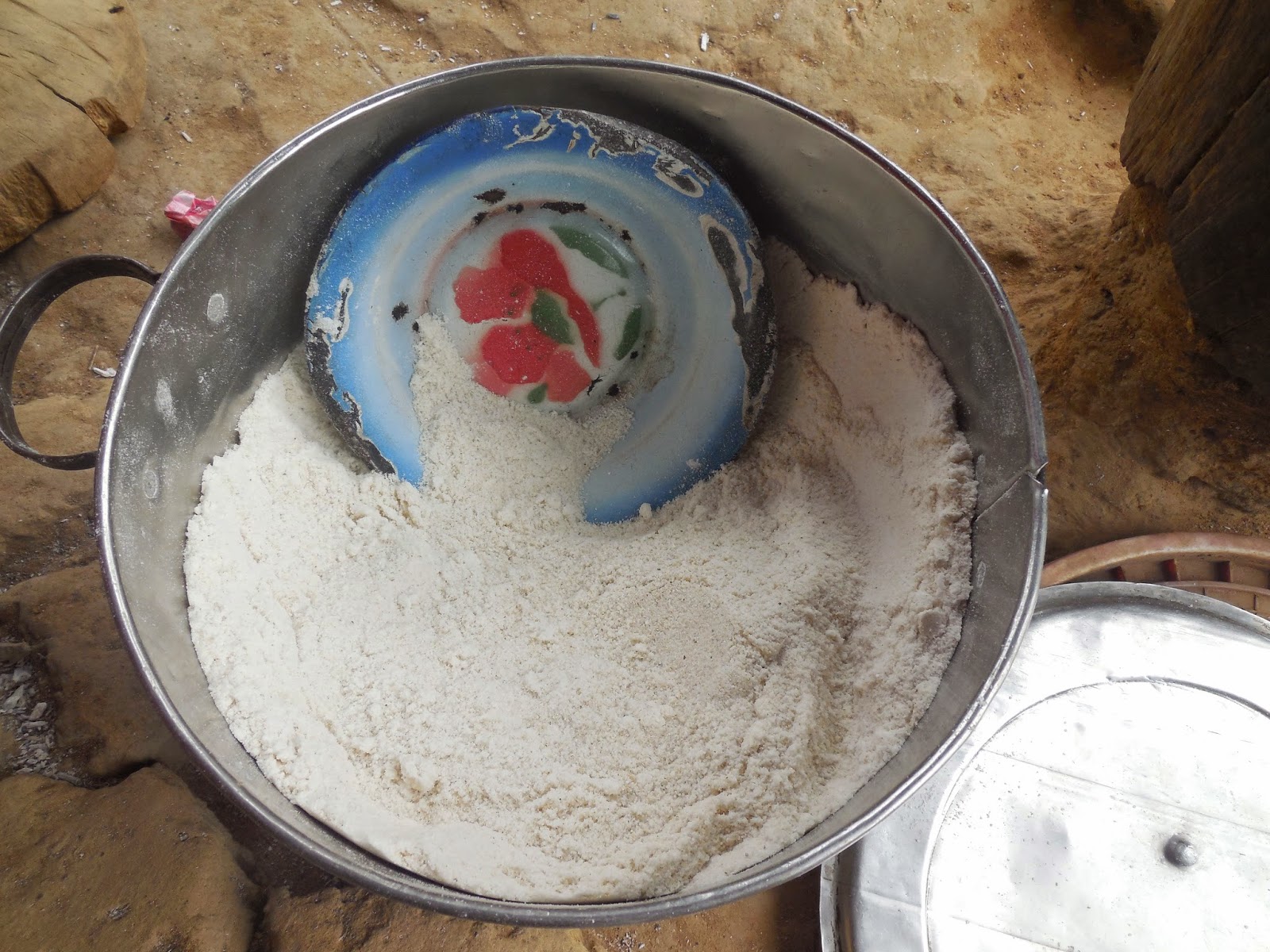
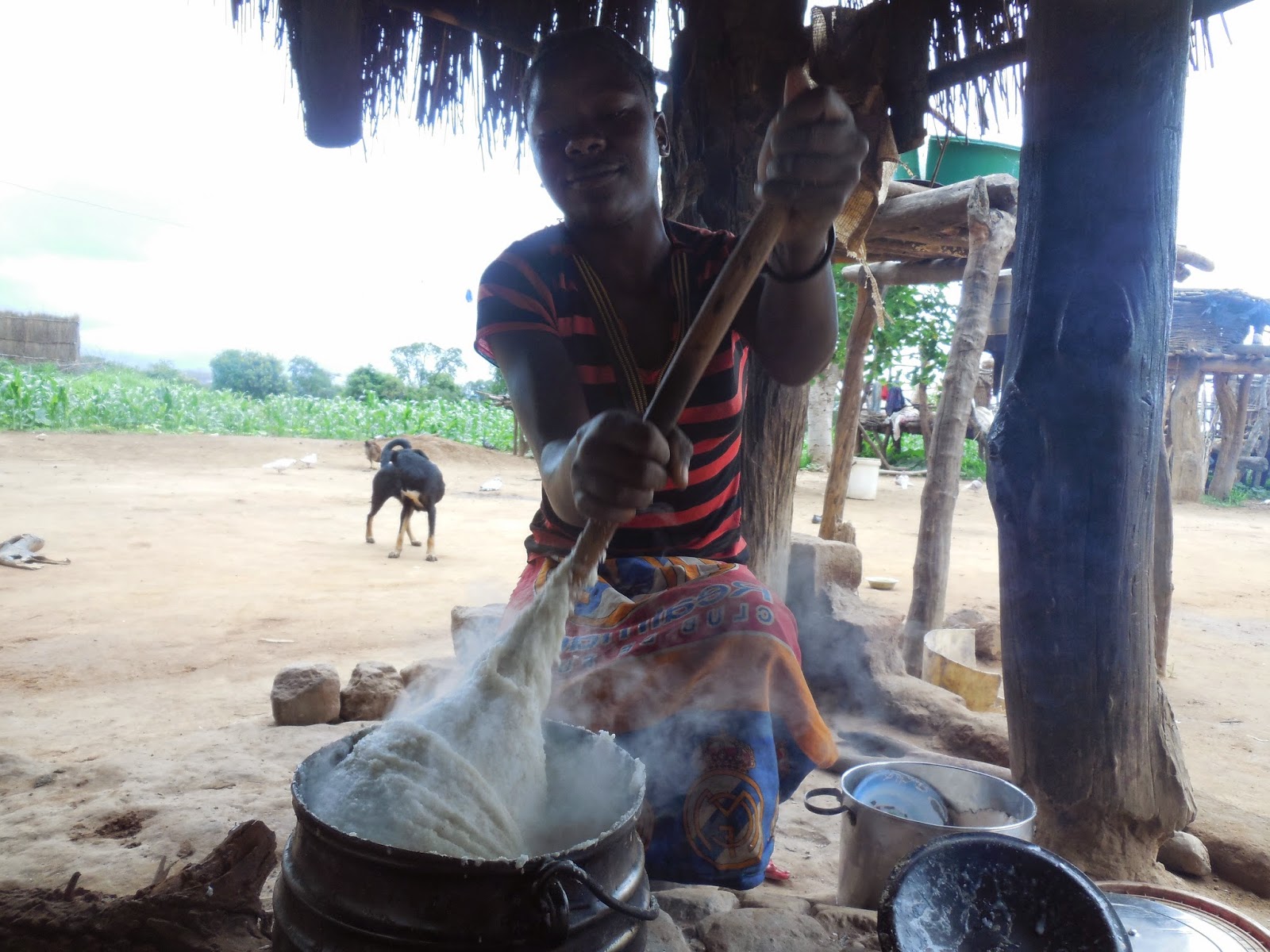
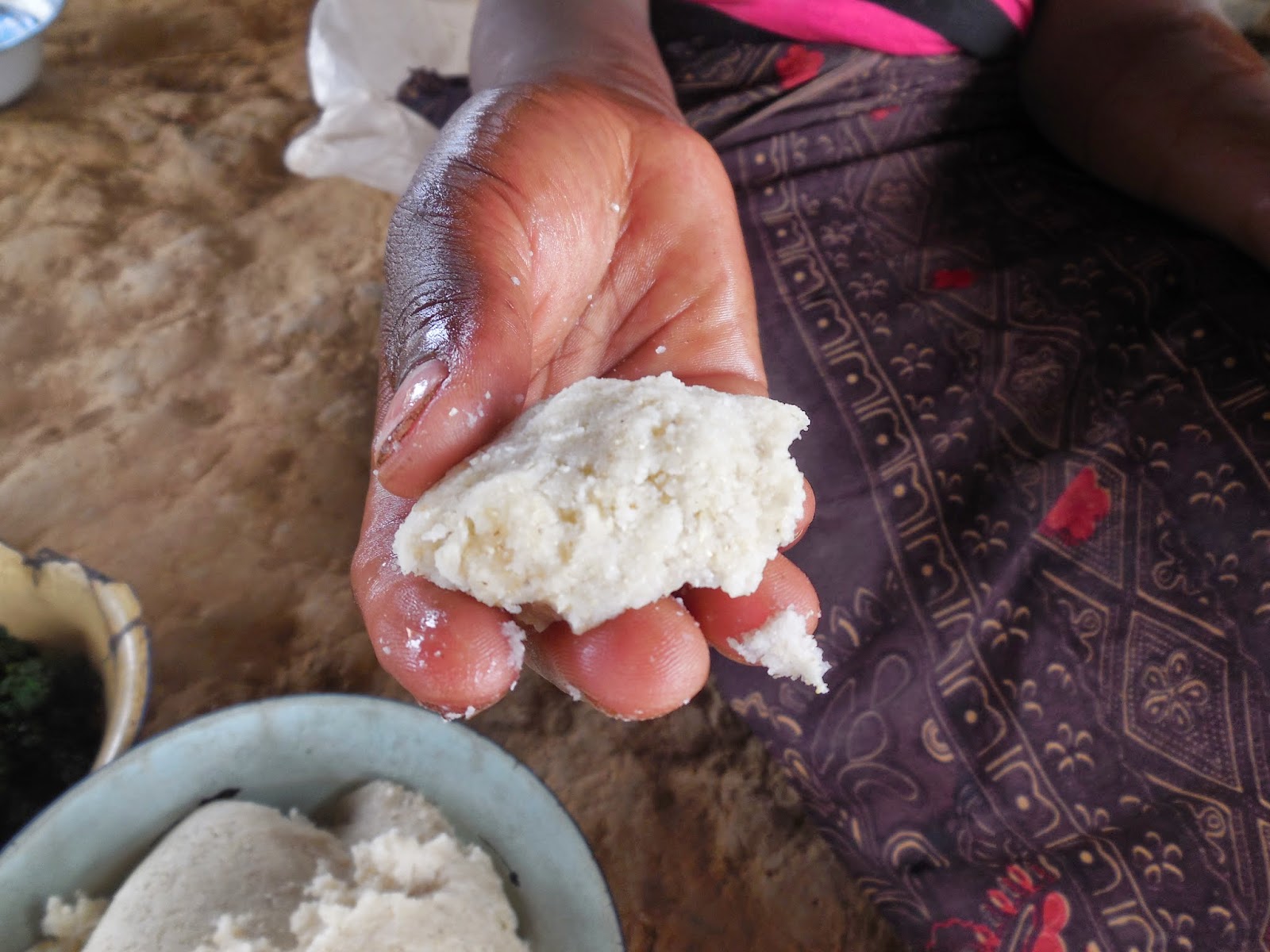
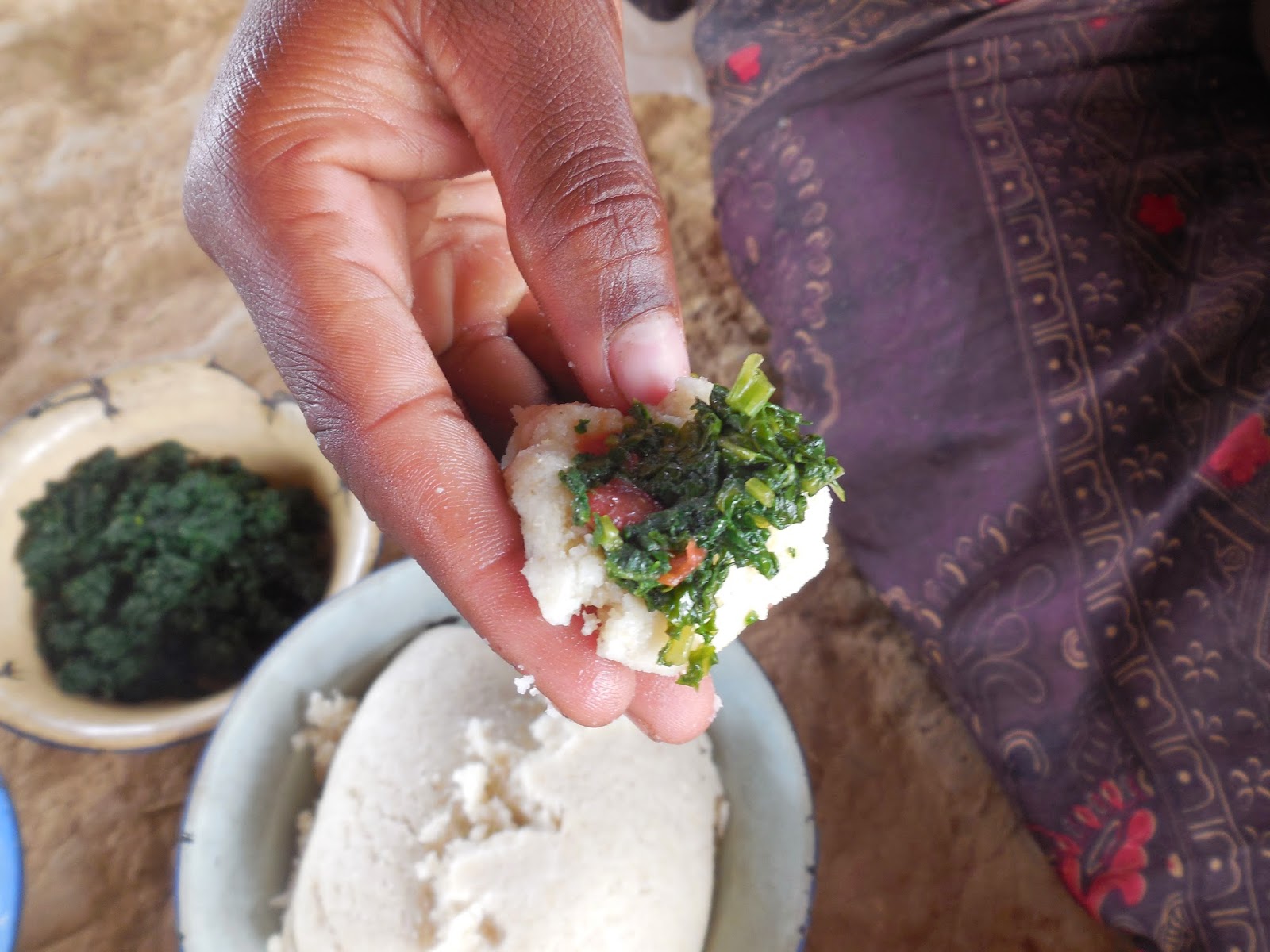
As I am asked what I eat in America, I come to realize that it is a foreign concept to have a myriad of food options at every meal. In Zambia, the staple food is nsima. Nsima consists of ground up maize (corn) into a substance called ‘mealy meal.’ Nsima is made by boiling a pot of water and slowly adding mealy meal until it becomes a thick porridge type substance. In the village the pot is often gigantic in order to feed many family members. On my family’s compound there are often over 16 people at one time eating the same meal. The few times I have tried to ‘stir’ the substance I have found it to even be a bit of an arm workout ;) After the nsima is cooked, it is then scooped into medium sized oval shapes and covered with a plate while the relish; also known as ‘side’ of the meal is cooked. A very common relish cooked in the village is called, “chisu chabuntele.” Chisu chabontele consists of pounded groundnuts mixed with a vegetable such as pumpkin leaves, rape (leafy greens), cabbage or any other vegetable accessible. For most families in the village, meat is a rarity and eaten only on special occasion. Meat is expensive and families tend to save their cattle for work. Some families have chickens but these are small in number. From observation is seems as though people intend to conserve some of their food stock resources in case of intense desperation and hunger season. 
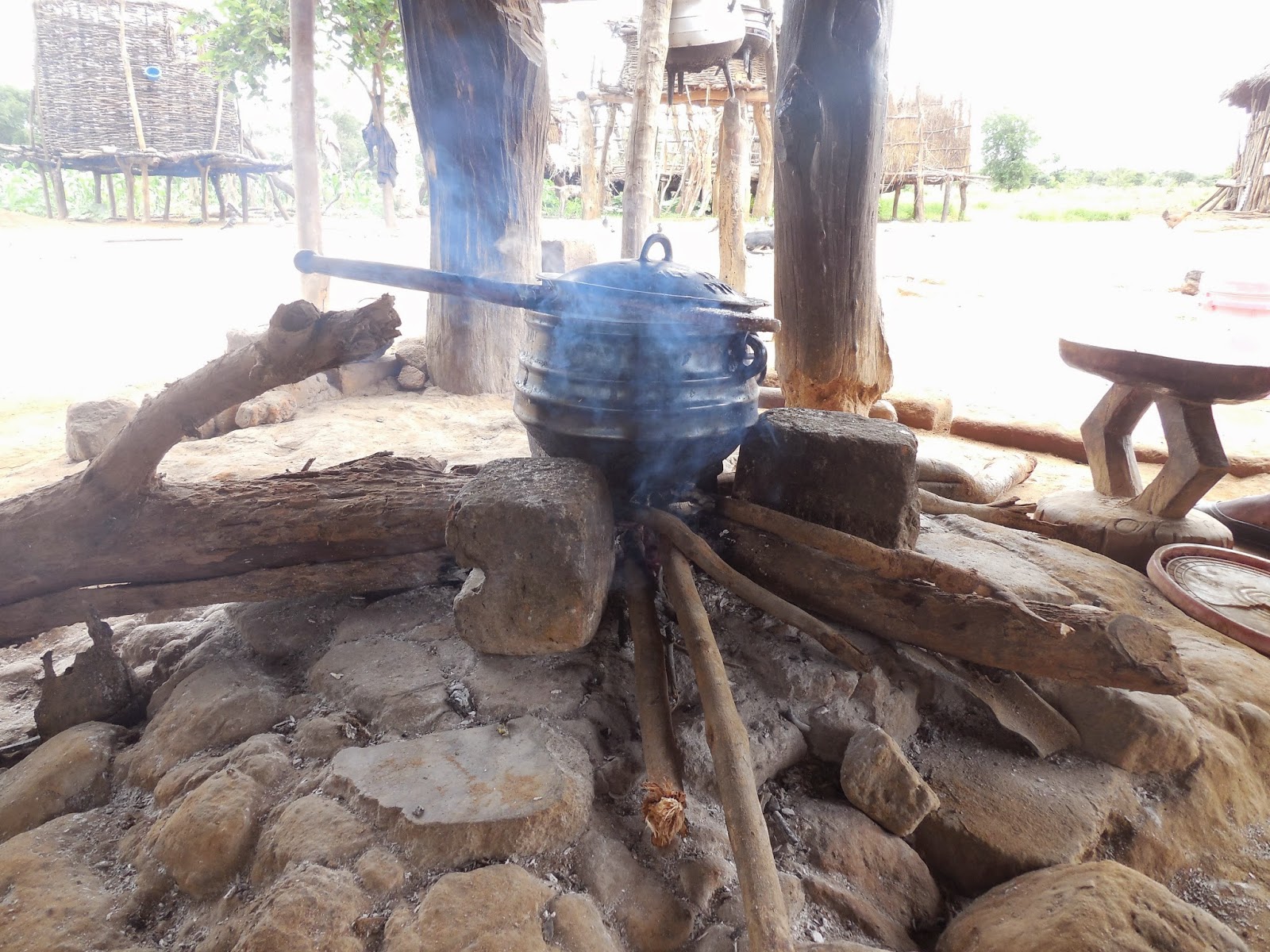
Step 1: Prepare fire using firewood or charcoal 
Step 2: Gather mealy-meal (pounded maize) to mix with boiling water
Step 3: Mix mealy-meal with boiling water
Step 4: Form small ball of nsima in right hand
Step 5: Use nsima to scoop the relish
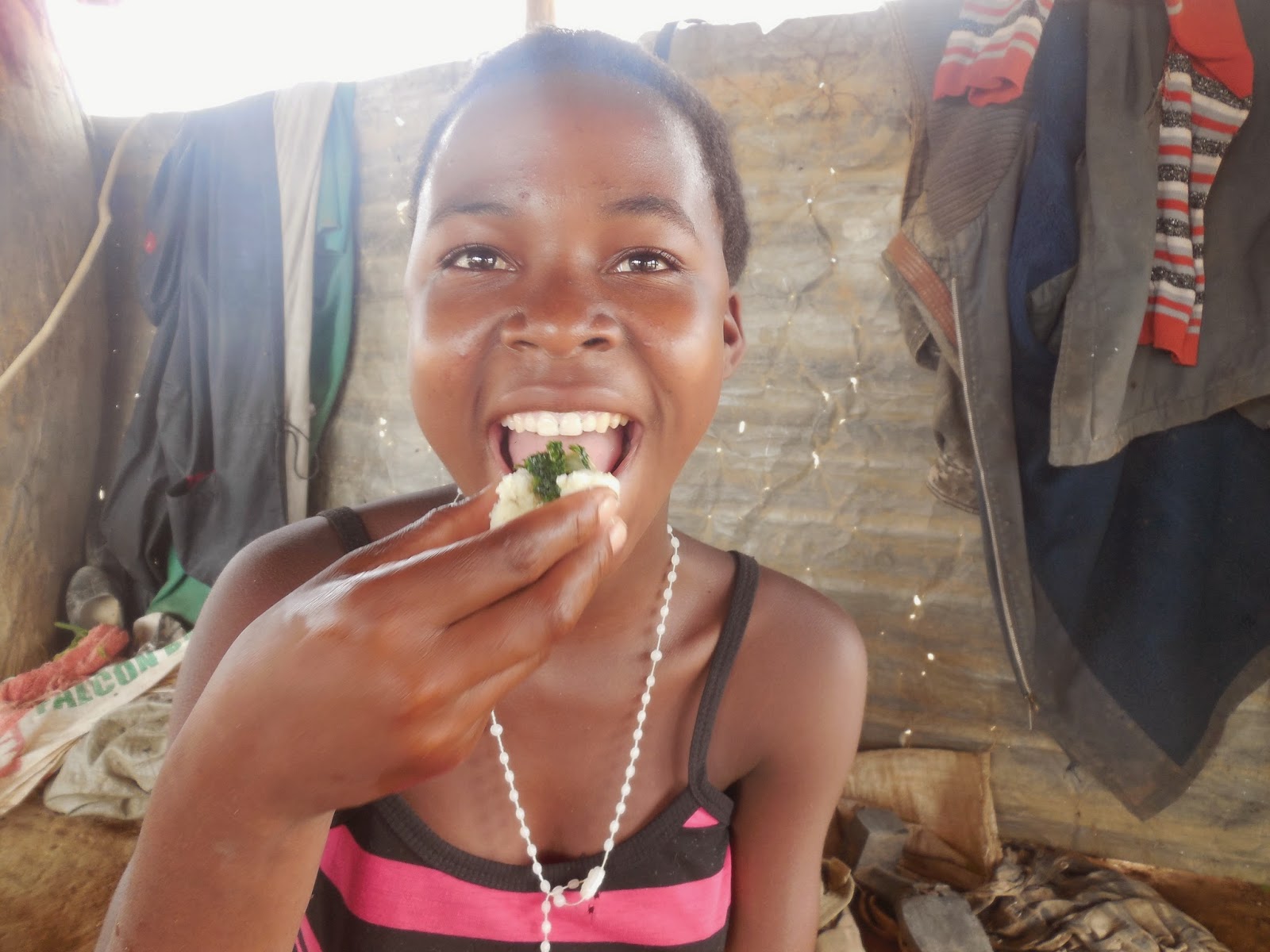
Step 6: Bring to mouth and ENJOY!
Most rural Zambians are subsistence, small scale farmers with their main crop being maize. The next most prevalent food source grown is groundnuts, beans, and vegetables such as cabbage, pumpkin leaves and a leafy green called rape. Hot season occurs August-October where preparing and planning for farming take place. When the second heavy rain falls Zambians begin to plant their maize and various crops and continue working in the field until April. If there is hunger in the village setting this typically occurs during the rainy season because a family was perhaps unable to store enough maize, vegetables, and sources of proteins for the entire season. This can be common when the rain happens later than expected. The final season takes place from April-July during the cold season when the harvest is ready.

The Pecking Order
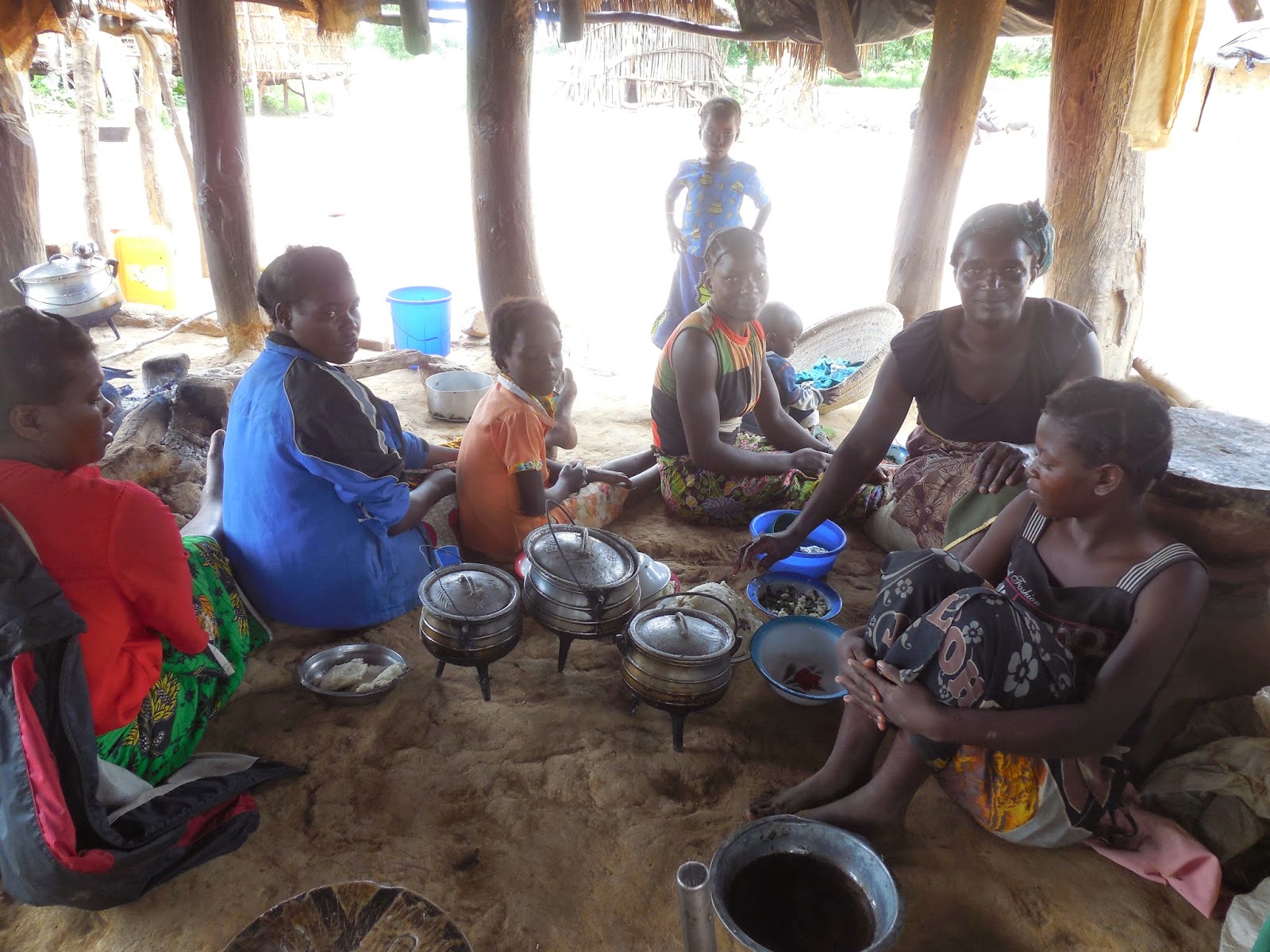
When eating takes place, men, women and children are separated accordingly. Within my family it is usual that my Ba taata; or host father, has his own table and is served first. The next people to eat are the boys of all ages in the family. They typically use stools to sit while eating. The last to eat are the women and girls. The women and girls sit on the ground in a circle with the large bowls of nsima and relish in the middle. When eating, people will simply share the pots and bowls, dipping their hands in the nsima bowl, forming a small ball in their hand and then using this ball to scoop the relish from the other bowl.

I have been in many situations where the men have been served something viewed as special and the women must wait many minutes and are often given a different food. For example, this past week I visited my host family’s extended family and was bombarded by this food pecking order. After socializing for many minutes, the men were served nsima and chicken. Because I am a foreigner and white (yes, I think the color of my skin matters here and there is no denying this fact) I am typically served with the men. It is a strange feeling to be served while I watch my host mothers simply watch knowing very well that on our walk to this place one mother was mentioning how hungry she was. At times it makes me feel guilty. After about 40 minutes we were then brought a large bowl of a commonly eaten main dish called, ‘msoya.’ Msoya is cooked maize kernels that is rather chewy. At this point the women and the men can eat this together in the same area; the women sharing one bowl using their individual spoons and the men having their own individual bowl and spoon.
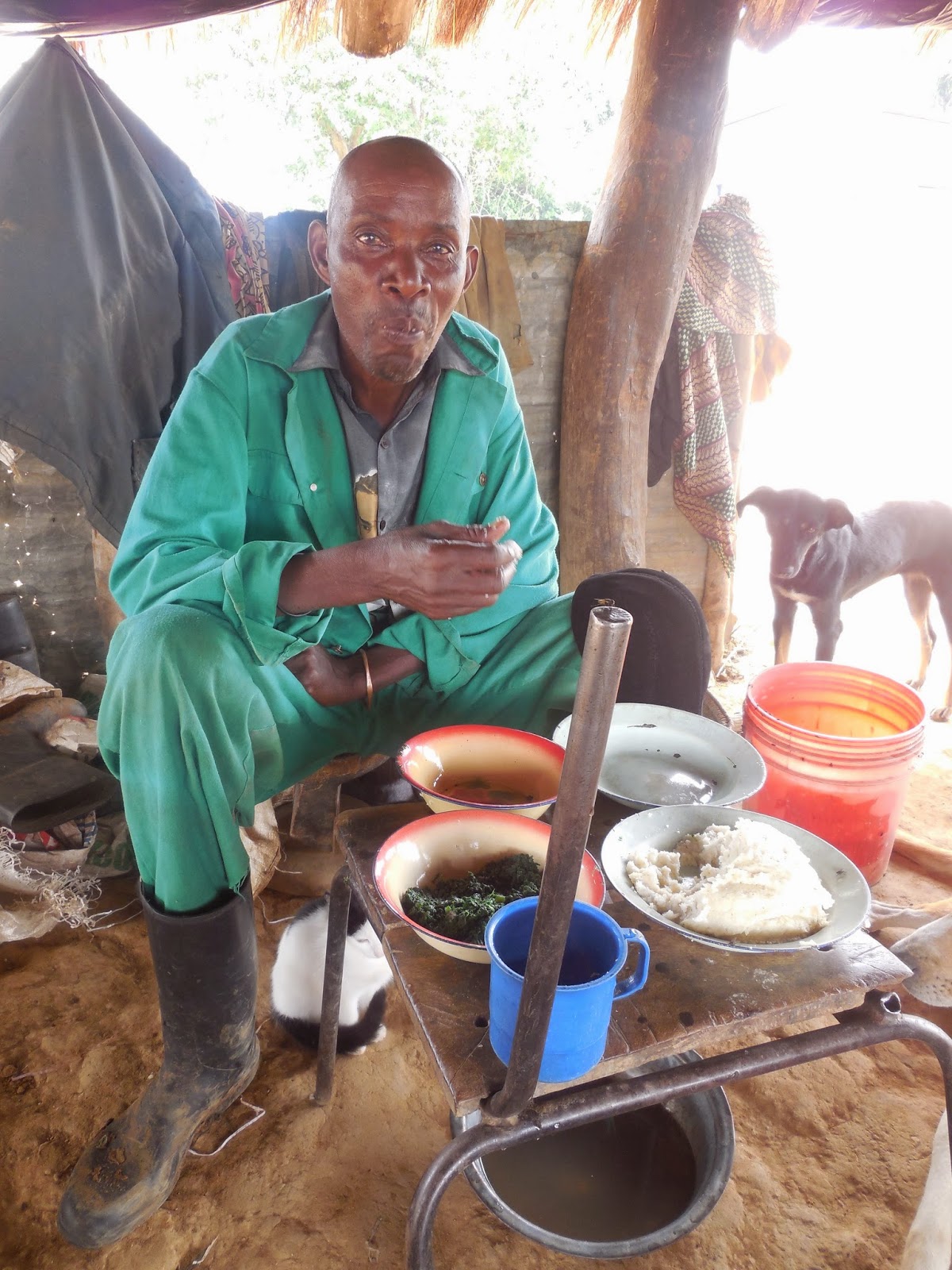
Host father eating with individual 'table'
Girls and women circled around nsima and relish ready to eat

If you're looking for a Zambian afternoon snack: Try nswa-insects packed with protein that tastes like popcorn when baked ;) 


Cultural Fun Fact
In Zambian culture it is considered rude to refuse food. The proper response is to try at least a bit of whatever is being offered. 

Thursday, January 15, 2015

Water is Life

America: Wake up, walk down the stairs, turn the faucet on and fill a glass full of deliciously fresh tasting water. After gulping this down I decide to take a shower. Stepping into the tub, I turn the knob and all at once there is a fountain of warm water above my head engulfing my body. Shortly later I begin a load of laundry by placing clothes in a machine, turning the button and waiting until it is filled with water, sloshed around with soap and deemed clean. Next, I open the sliding glass door to water my garden. I rotate the red knob and the hose is filled with cool feeling water, ready to drown the plants in hydration. 

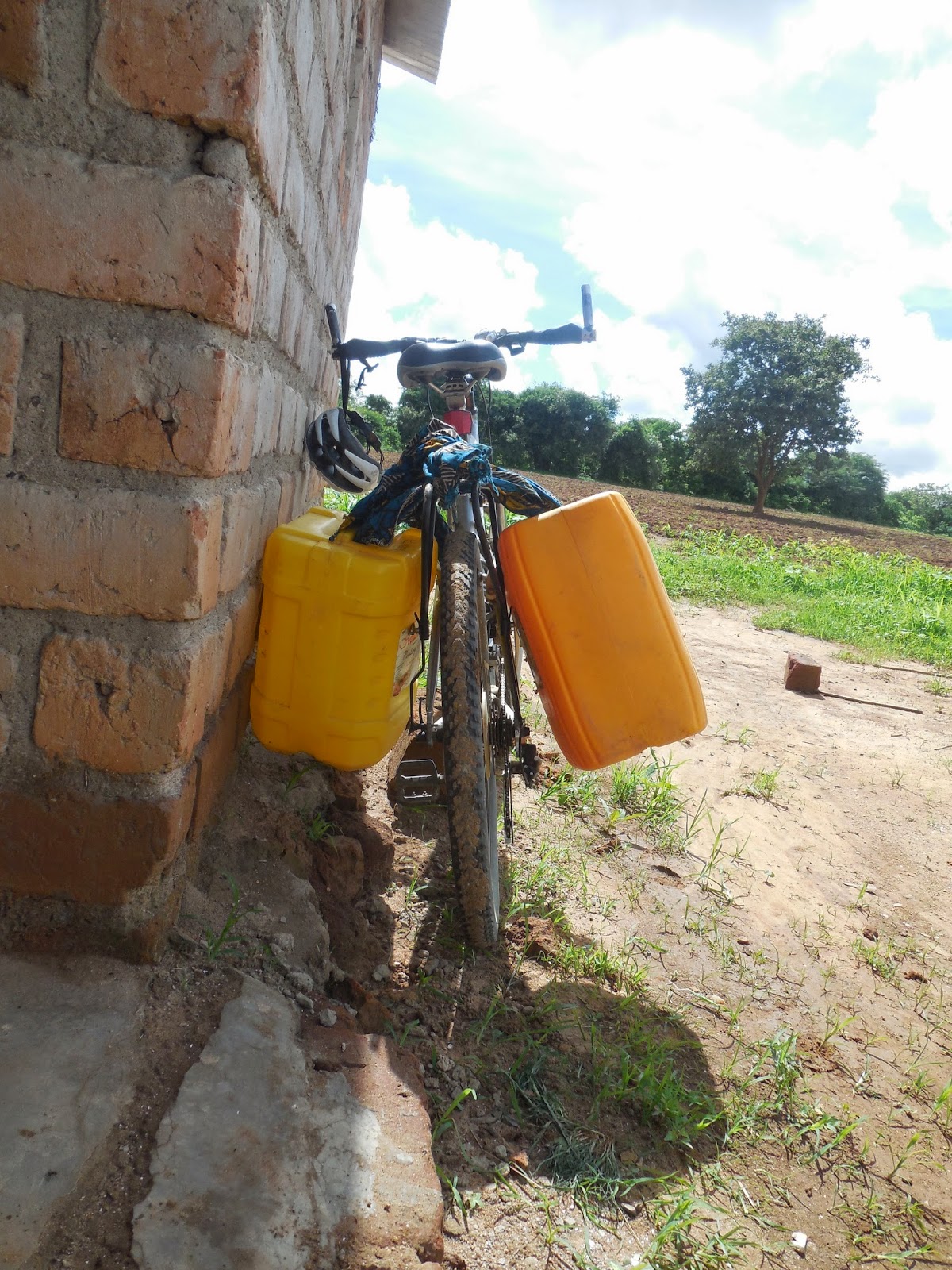
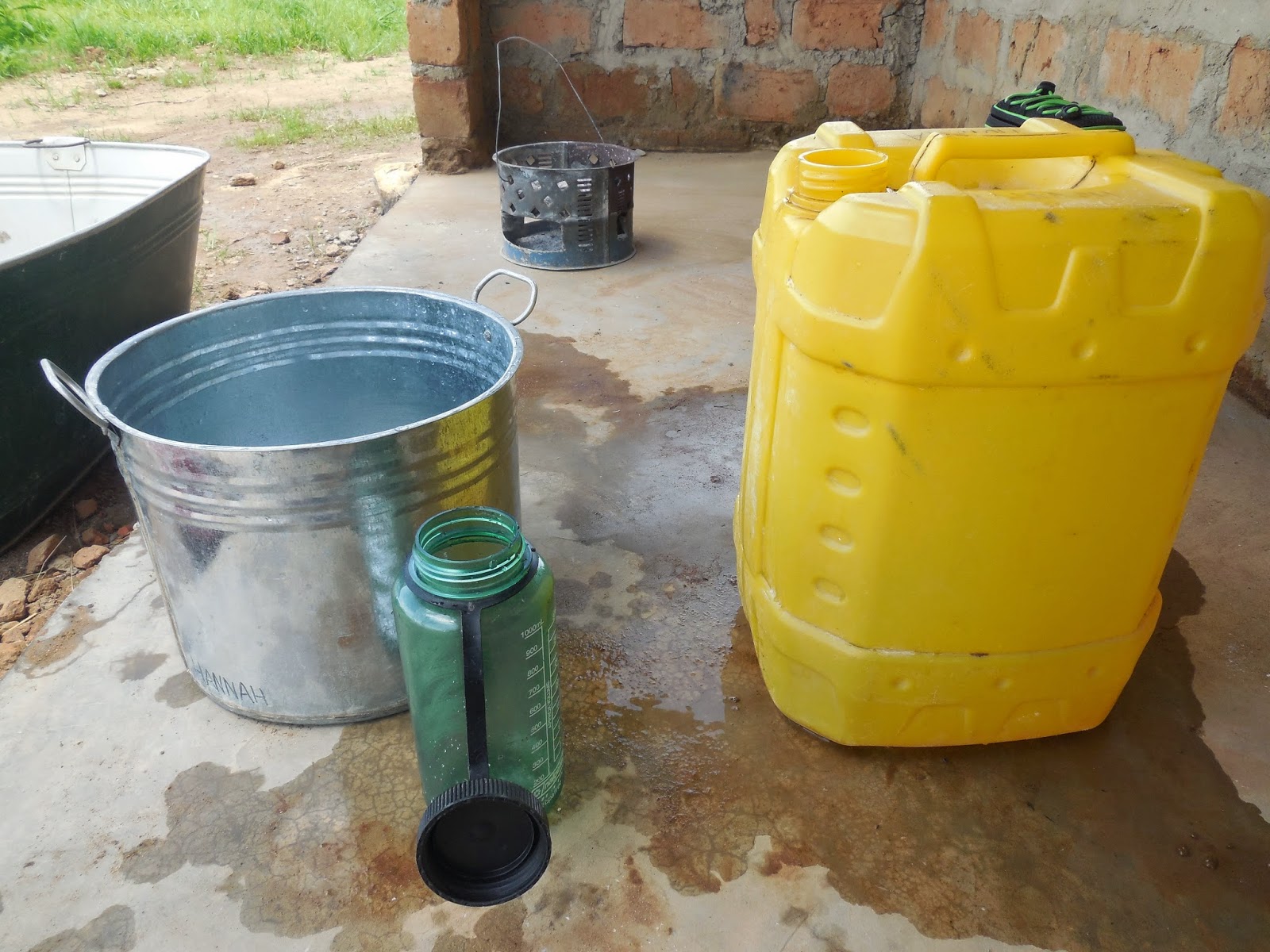
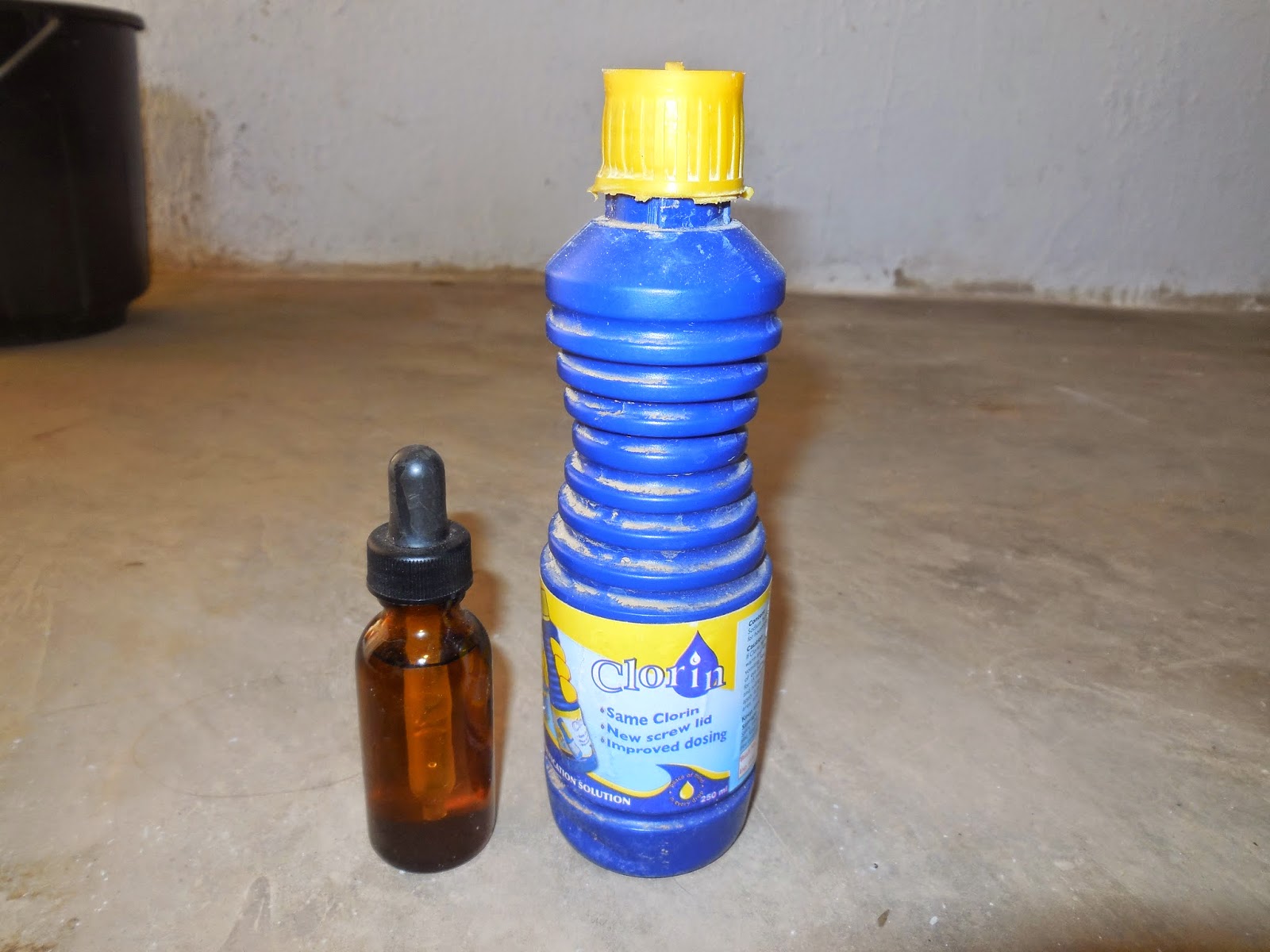
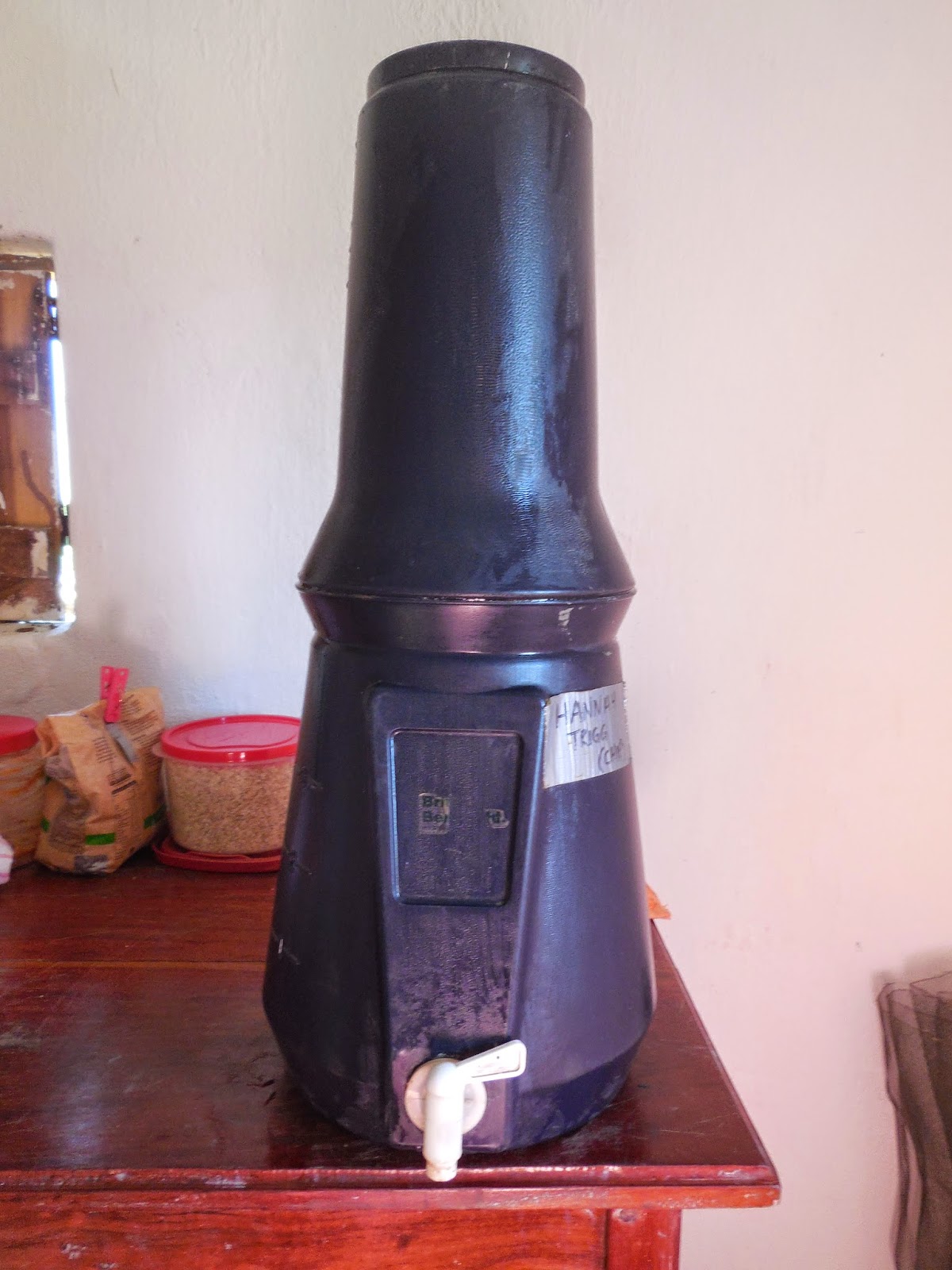
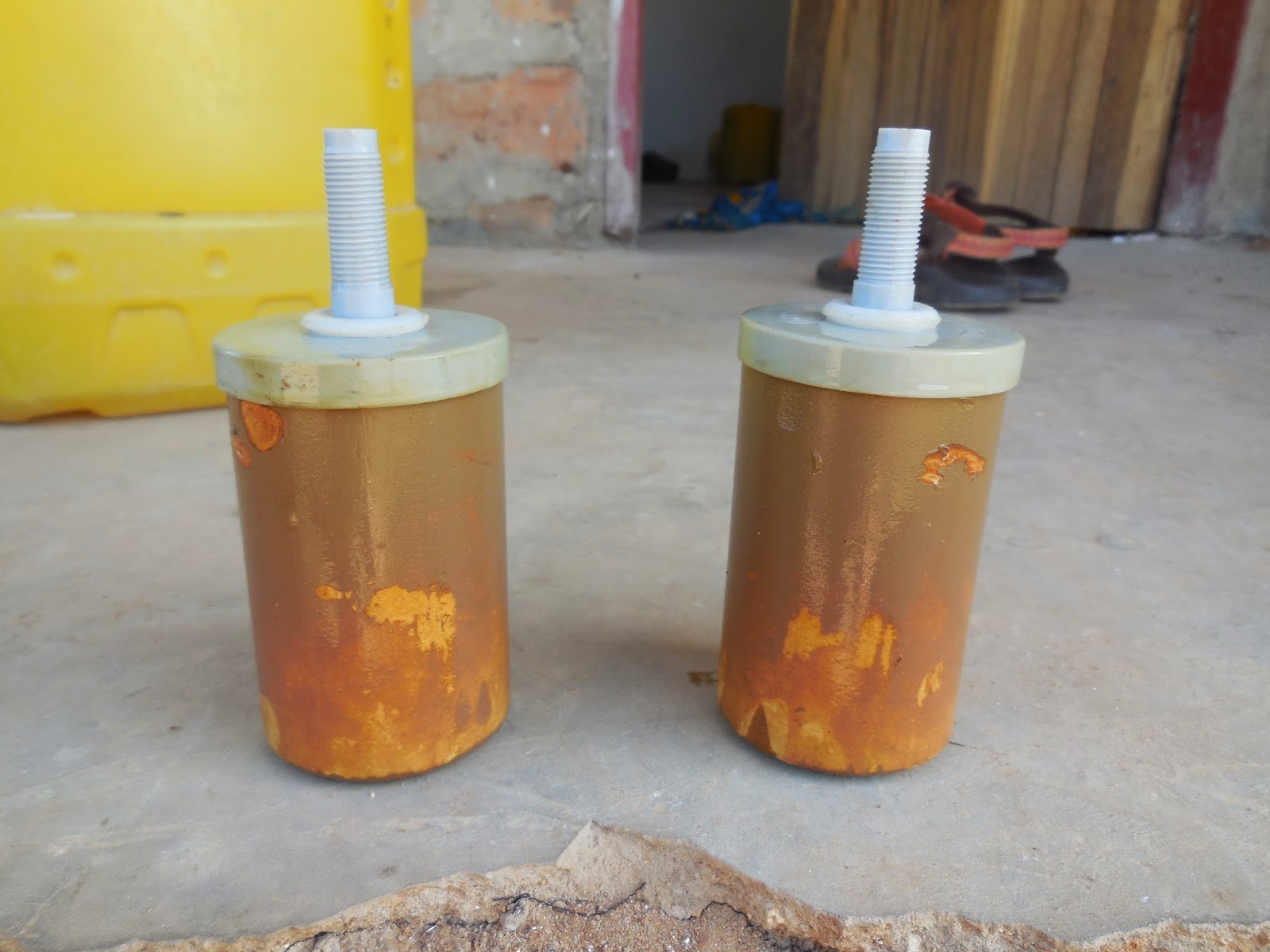
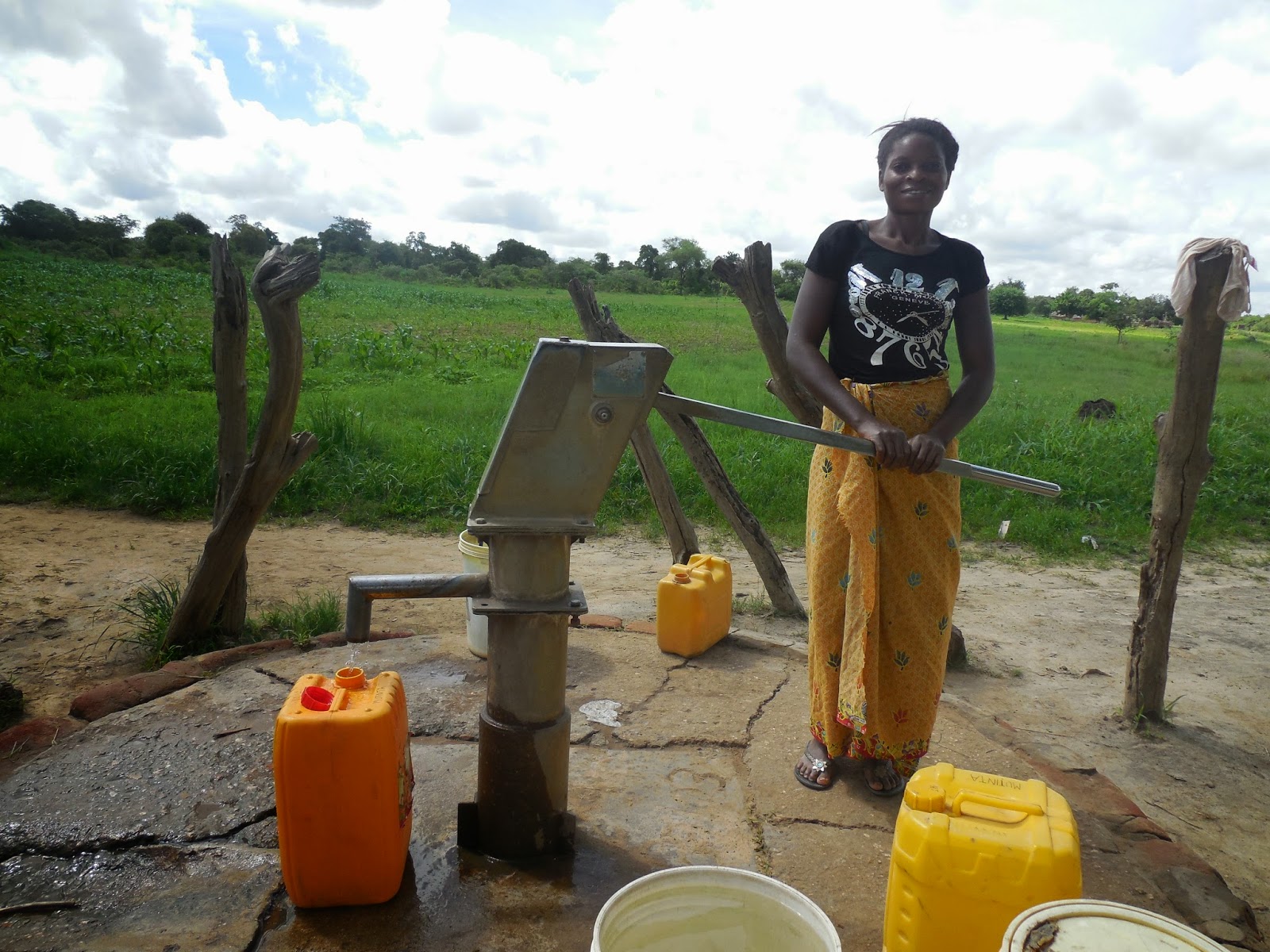
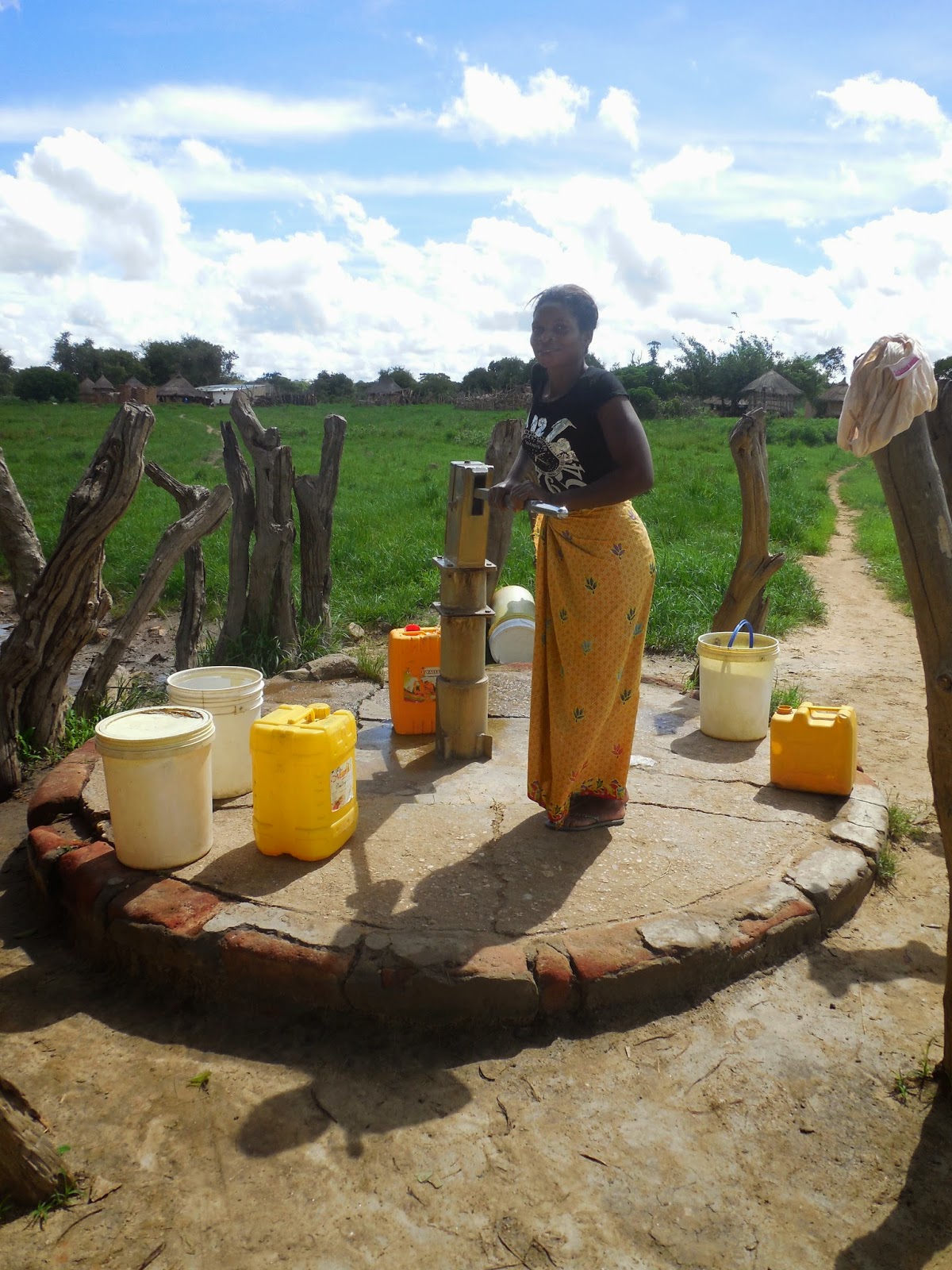
Rural Zambia: I wake to find that I have no clean, safe drinking water. I feel parched. Quickly I head outside my hut, strap on two 20 liter jerry cans to the rack of my bike and cycle about 500 meters to the nearest source of water. When I arrive at the hand pump there is a line of children and women attempting to pump water using the strength of their arms to move the metal lever up and down. The child pumps and pumps until there is no water left. Exhausted, she sits down waiting for the hand pump’s pipes and groundwater to restore itself and collect more water. Filling one 20 liter jug can up to 15 minutes during the hot season when there is less water below the ground. As I count the number of empty buckets and jerry cans positioned on the concrete slab I begin to realize THIS is how I will spend my morning. I will be waiting here for about 1 hour. My throat tingles at the thought of ice cold water that would have previously been so convenient in my ‘luxurious’ American lifestyle. Many minutes later, I am pumping my water for my very own water jugs. Once these are full I tie a citenge (cloth used for basically everything including daily dress for women) and carefully manage to pick up both jugs and place perfectly on my bike rack so there is balance and harmony. Upon arrival at my site I measure out 5 liters of water, pour this into a large bucket and then proceed to place 10 drops of chlorine into the large bucket. I wait thirty minutes. After these thirty minutes have passed I then pour the 5 liters of water into my Peace Corps issued water filter where the internal candles are meant to catch any loose particles or impurities. Once the water is filtered through I am then able to pour it into my clean Nalgene bottle and drink.

Jerry jugs strapped onto my bike
I fill five liters from the yellow jug into the silver container
I chlorinate the water using this dropper

My Peace Corps issued water filter
Dirty candles within the filter
'Clean' candles after a thorough tooth brushing
As you can imagine, the process for anything water related is similar to this in rural Zambia. ‘Taking a shower’ involves heating water (when I am feeling especially ambitious), pouring water into a bucket where I then use a pitcher to ‘scoop’ the water onto my body like a waterfall. Washing clothes involves two buckets; one filled with soapy water and the other filled with plain water. Any activity that involves water here takes at least 3 times as long as in the developed world. Tasks involving water require mindful incorporation into an individual’s daily schedule. 

Attempting to wash my clothes...

Water sources throughout my community
Many individuals must travel long distances (up to 6km) on foot in order to reach the nearest borehole. Fortunately, Peace Corps has issued me my very own bicycle in which I use to transport my water. It is a luxury to have a bicycle in the village. Instead, most people; women specifically, are traveling on foot and proceed to carry the buckets of water on their head (a sight I am still amazed by). I have been told on many occasions that many children at times must actually miss school because they are fetching water for their families that is very far in distance. As you may guess, this is usually the girl child; another struggle within gender disparities found here.

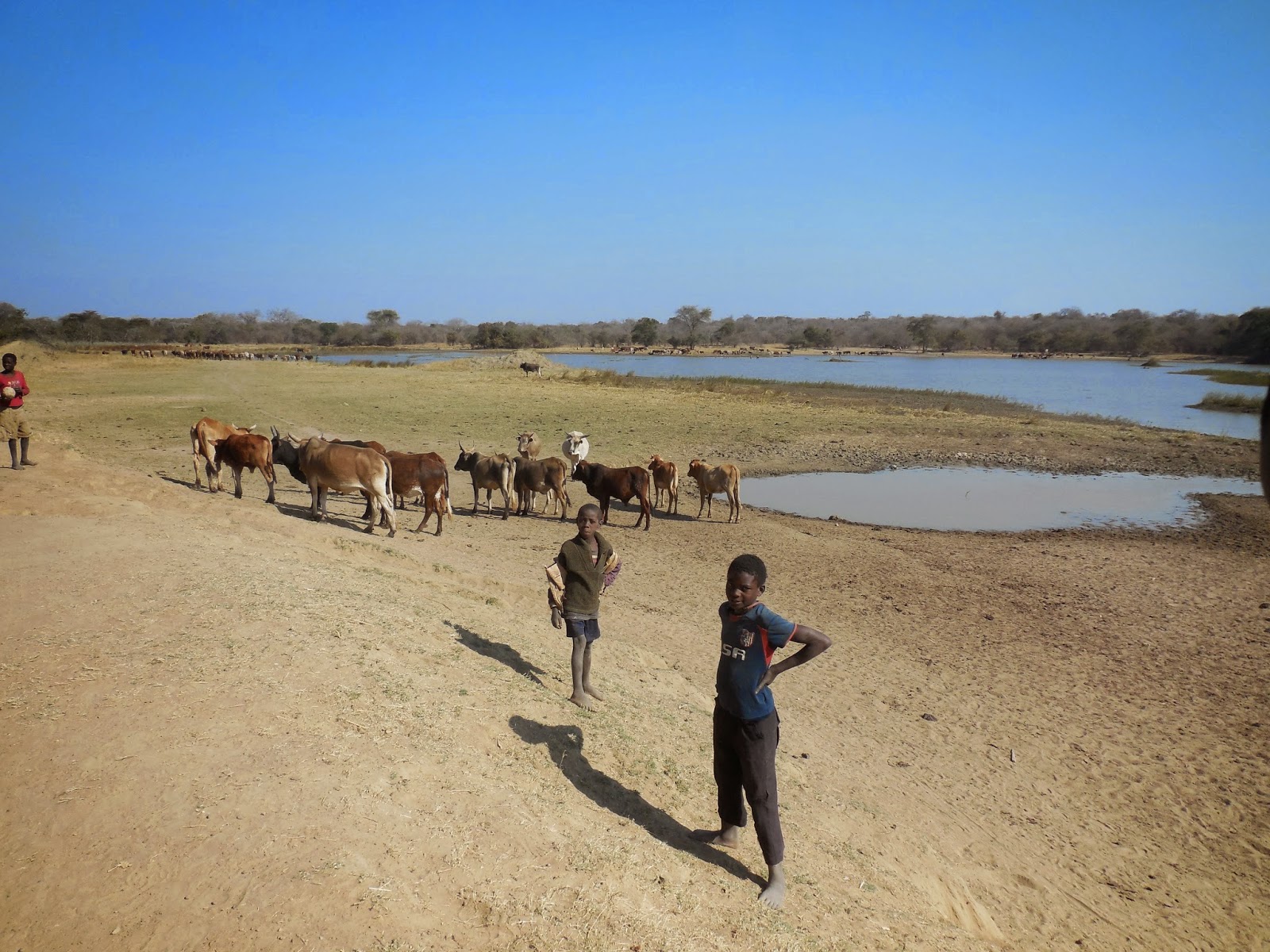
The main water sources of water for those living my community are shallow hand-dug wells and boreholes to utilize the groundwater available. There is a major shortage of boreholes and clean water sources for community members. In fact, many of these boreholes are not protected from animals causing another health concern. Those who are not using hand pumps are using streams or dams which are typically even more contaminated and unhealthy. Due to the fact that many families do not boil or treat their water with chlorine before drinking (many cannot afford chlorine and/or do not see the necessity of boiling before drinking) it is apparent that some of the largest health concerns in my community stem from poor water quality and sanitation.   

Diarrhea, coughing, sneezing, common colds, and other diseases/illnesses easily passed on through lack of clean water and poor sanitation are very prevalent throughout my community.

You may be asking, “Does the Zambian government have regulations for water sources in the rural areas?” The answer to such a question; as well as other health related matters in terms of government policies, is often a bit slippery. One area that is seen as a priority is water availability at the local schools. At each school there is a borehole that provides the school children with water throughout the school days. While water sources at schools are a major priority for the district, there are often areas that are overlooked for a myriad of reasons. The district ministry of health is ‘supposed’ to monitor the availability to clean water sources in all areas but this is often overlooked or not deemed a true health concern pressing enough to take action upon immediately. Boreholes/hand pumps are needed in many areas in my community but unfortunately the district cannot afford to construct these everywhere. There is a process whereby if a community can raise about 1/3 of the amount it takes to complete the borehole, then the district (or another NGO) will come into the community and build the structure. The problem here is many villages are not willing or unable to contribute such funds. Some people in the village may see their water source as an issue but are not willing to give a small amount or work together as a community to raise the funds for such a construction. Of course people do not have an endless amount of money in remote villages, but there are have been a handful of villages in my community that have raised the funds (perhaps each family setting aside a small amount each month to contribute) demonstrating that it is possible. Personally, I like this approach; perhaps I am biased because I am working in sustainable development. When organizations; or even the government, simply come in and hand out ‘free’ things to the community and villages it often makes villagers dependent and reliant on outside help whereas when people here in the community take ownership of their own projects it often empowers them to continue to maintain their projects or programs thus making them less dependent on outside sources-the goal of Peace Corps!

My closest hand pump/borehole
There is no protection around the water source preventing animals from coming near and defecating 
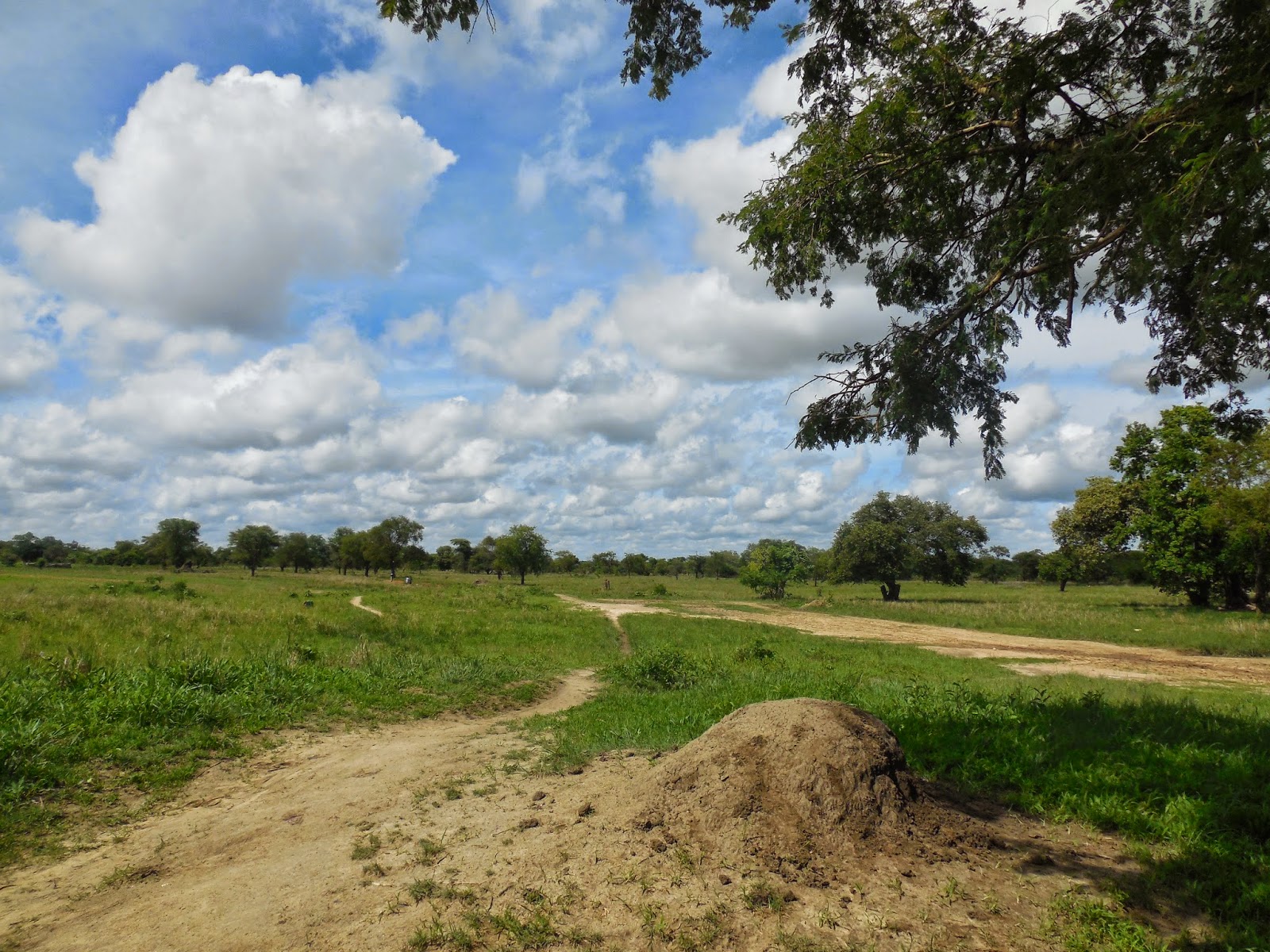
View leading to my water source
One of the many dams people use as their source of drinking water. Take note of the cattle surrounding the dam.


Water is a precious resource
If I have learned anything from staying in a rural African village with water issues, it is that safe and clean running water should not be undervalued. It should not be wasted either. All beings that exist on this earth survive through water. As humans, we are using water constantly whether it is for cooking, cleaning, washing clothes and dishes, bathing, work, farming, or drinking. Water rules our existence. I think it is worthwhile to think of how much water we consume on a regular basis by asking ourselves questions such as, ‘what do we use water for and how much are we using?’

A human can survive for more than three weeks without food. Without water a human an only survive about 3 or 4 days. 

In Chitonga we say, “meenda abuumi.” In other words, water is life and should be handled with care.


And......Just for kicks and giggles...
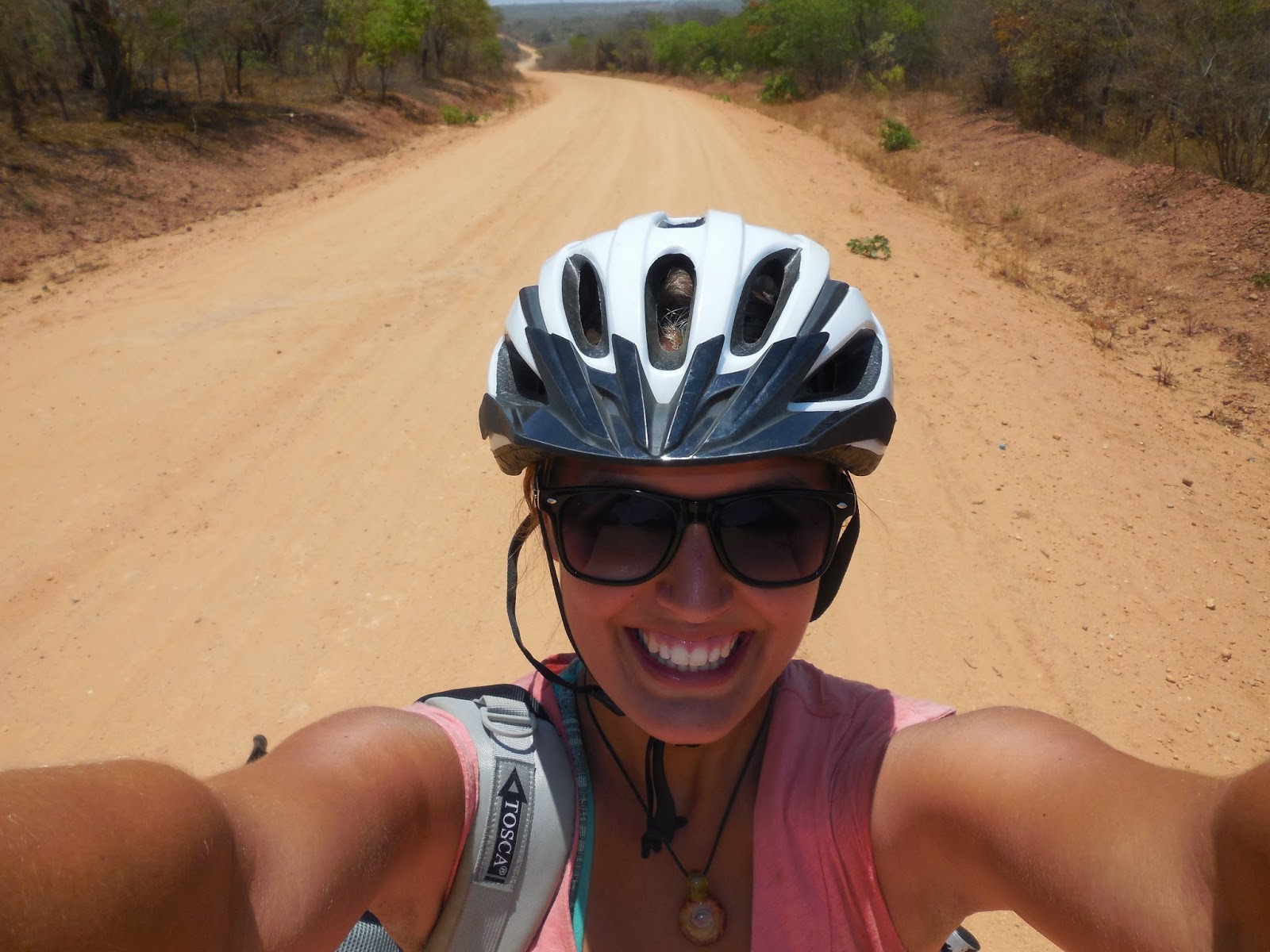
My road block each day ;)

Friday, January 2, 2015

Work hard, be kind and remember to play


For the past six months I have been on what some might call 'Peace Corps probation.' The first three months were spent training and living with a host family. The second three month period was spent in a time called, 'community entry' where volunteers are not technically allowed to travel outside of their district or the country. Needless to say, I was itching to MOVE. After two weeks in the capital of Zambia 6 volunteers and I decided to trek to the famous Lake Malawi. Malawi is the country to the east of Zambia and known for possessing this gorgeous lake. We spent the week relaxing on the beach (exposing body parts that hadn't daylight in MONTHS), kayaking, hiking around, boating, and dancing (of course). It was a much needed break. As a Peace Corps volunteer we are given a total of about 42 days throughout our service but this does not include holidays which give us a bit more time. We are also given four cultural days every three months that can be used to travel to Victoria Falls and engage in cultural exchange and learning throughout the country. 


Happy Holidays to friends and family around the world!

Monday, December 1, 2014

“This is a man’s world.”

Coming from a Women’s Studies background, possessing an unwavering passion for equality across all realms for men and women I believed my time spent in Zambia would add much to this passion by bringing forth new experiences and challenges. When I first arrived in Zambia, I was a bit shocked by the way in which I felt completely comfortable with how I viewed gender roles and relations. Due to the fact that Zambia is a very peaceful country; the people being no different, I was under the impression that people seemed rather content with the roles they play in their lives as men and women. I even went as far in a previous blog regarding polygamist marriages to say that the women appear happy and the multiple wives act as if they are friends. While I have no doubt this may be partially true and of course not ever situation is the same, I have recently had to remind myself of the age old saying, ‘don’t judge a book by its cover.’ What appears one way the first time you see it, may not in fact be what the reality is. This has certainly been the case in regards to gender relations.

It had been a long time since I felt truly, ‘fired up’ about an injustice imposed on women. I usually have these what I call, ‘spirts’ of fiery passion regarding some dramatic feeling and thought I have regarding the superior position I so often find men to be placed in by mere birth right.

After talking with several women who are living in polygamist marriages, the consensus in the words of the wives is, “it’s not good.” Someone from the ‘developed world’ may automatically think, “well of course it’s not, there would be TONS of jealously.” While I am sure there is jealously, it appears that perhaps a larger concern is the distribution of wealth. If one man has three wives and 19 children in total (I must admit, this is my host father), how will he decide which child is sent to secondary school? How will he manage to provide enough food for the entire family let alone soap for the family to bathe with?  In Zambian culture, men are the head of the household controlling the finances and resources in the family. Although women are usually helping in the income generating work in the fields, they often never see the money. In fact, when the maize is finally cultivated many wives may be given zero funds, questioning where in fact the money even went. Sometimes women create their own income generating activity (for example selling animals, making goods, etc.) but usually they are at the mercy of their husband and what he chooses to do for the family.

The persistent cultural belief of a patriarchal society poses challenges for health related work as well as daily life for individuals in Kasiya area (my specific area). Gender roles are clearly defined and women and girls are expected to not only help in the fields, but to assume responsibilities of all the housework and caring for children. Many men have more free time often spending it socializing. In fact, there are a handful of men who spend their free time drinking the local maize beer resulting in them leaving the wives and children in the home. Child labor is common, with boys helping in construction and much manual labor. Girls often assist with much of the housework including fetching water, sweeping, cooking meals for the family, and childcare for the young children. At times, children are forced to miss school in order to help with the family chores or field work, jeopardizing their opportunity for education. In many families men are fed first, then women and lastly children leading to the youngest receiving less or perhaps the worst portion of the food. In addition, almost all people in the area cultivate maize/corn but very few grow any other crops or vegetables causing a lack of variety and balanced meals for the family. This increases the likelihood of malnutrition and anemia within my community.

From my perspective women are oppressed in many ways in Tonga culture. I believe the over-arching theme is a lack of personal autonomy and lack of power. Some examples can be seen in polygamist marriages, frequent domestic abuse, men being given stools to sit on while women usually sit on the ground, lack of power in decision making among women, and the distribution of familial house work. The list could go on and on (perhaps I will write a full on list someday). One striking observation has been the prevalence of pregnancies among girls in my community. It is not uncommon to find many girls dropping out of school because they have been impregnated by a much older man or they are told they must stay at home in order to take care of the daily chores.

Does every woman feel as though they are oppressed though? No, I do not think so. It is possible that some of the relationships between men and women are relatively ‘equal.’ I would like to suggest though that I think that for the most part, when it comes to village life, there is a vast inequality that persists. I would also like to suggest that men simply have more power here. Fortunately, I have met some men who can understand this and are perhaps trying to even the ‘playing field.’ On the other side, those who have power in this world are usually not extremely willing to give this up.

Judging from my initial perhaps incorrect impression of gender relations in Zambia, I am not naive to the fact that I have still only been here for less than six months so I have much more learning to do. I am also aware that I am writing from my own bias. I can only write what I have experienced and what I am thinking based on my own filter of information.  I am also aware that I posses an insane amount of privilege just from being a white American. In fact, I am reminded of this privilege daily also making me question even more things. Ultimately though, I know that each day I will continue to learn more, adding more substance to these discussions and thoughts.  

While it can be discouraging thinking about the stark gender inequality that persists in Zambian villages, there are also many reasons to stay positive and ways in which things can change for the better. I truly think that one of the greatest ways to influence the status quo and the way in which many people view gender dynamics is through educating the youth population. Peace Corps has an option for us to run a club for both boys and girls on gender equality. Lessons include discussions around masculinity/femininity, roles within the family, personal role models, goals and aspirations, HIV/AIDS prevention and personal well-being. I believe that through programs such as these and open discussions maybe (just maybe!) there can be a change for the better. Only time will tell. 

I have included some pictures of some of the girls i am surrounded by who inspire me daily!


 “This is a man’s world but it would be nothing without a woman or a girl.”

Sunday, November 2, 2014

“We make a living by what we get, but we make a life by what we give.” Winsten Churchill

I have been at my official site now for over seven weeks. While there have been moments that have felt like centuries long, overall time is moving quickly. I am currently in a period known to Peace Corps volunteers as ‘community entry.’ Community entry is the first three months after initially being posted to a volunteer’s specific sight post pre-service training. Community entry is a time for volunteers to get to know their community and surroundings, meet many people, learn and speak the local language, design a community map, assess community health needs/issues, eat with neighbors and friends, and most of all, a time for adjustment into the new life.

Due to the nature and purpose of ‘community entry’ we are encouraged to remain in our villages thus making it difficult to access a place to update my blog. Because it has been centuries since I have last posted a blog I am just going to give a semi-quick overview of what I have been up to.

Each day I strap my jerry cans onto the rack of my bike and cycle 500 meters to my nearest water source (they call it a borehole or hand pump). Before drinking I place a few drops of chlorine and then put it through my water filter. I cook using either a brazier with charcoal or my methylated spirit stove. I enjoy cooking for myself but I frequently eat with my host family and am often invited and served food by many of my friends around the area. If you are caught at someone’s home around 12:30 it is almost a guarantee they will serve you lunch. It almost seems impolite to refuse.

Between the stark differences in cultural, language, work, daily conversations and contemplating my trillion thoughts per second, I often feel I am ready to explode with every single emotion known to humankind by the end of each day. For those that know me I am sure this comes as no surprise. 

Here is a snapshot into my rambled thoughts and experiences. Plus, I think bullet points are helpful and easy to comprehend. ;)

            1) I simply cannot emphasize enough the immense contrast between the way many in the developing country interact with one another and the way in which people here in Zambia interact with one another. Zambian culture is extremely collectivistic, highly valuing close interpersonal relationship, friendships and of course familial relations. Most families have about 6 children. Having a large family symbolizes wealth and happiness. If there are not many people will often feel pity for that person (just to specify: I am speaking of life in the rural village setting. Those who come from town or various cities have fewer children and recognize the value in concentrating on only a few children).

      2)  If someone has not seen me (and I think this perhaps goes for anyone in the village) for more than one day they say to me, “Mutinta, where have you been? Why haven’t I seen you? When are you going to come visit me?” I can only imagine what the will say if I ever decide to leave for vacation.

 3) Upon arrival, the community threw me a welcome celebration. All village headmen in my catchment area within the area I will be serving in were present along with health staff and other members of the neighborhood health committee. It was a bit intimidating having over 30 Zambian village headmen stare at me as I tried to speak Tonga to them, but it was a great experience. Throughout the meeting there was designated time carved out for the people present to dance. Someone would speak about something and then all of a sudden the music would turn on and everyone would begin dancing. At the end we enjoyed a local meal of nsima, cabbage and chicken.

            4) I encountered my first mouse in my hut several days ago. It turns out it had been living under my bed for quite some time. I normally regard myself as a fairly tough woman when it comes to bugs and wildlife but for some reason, knowing it is in my actual home is a very unsettling, creepy and disturbing feeling. When I first saw it, I screamed bloody murder and called my younger sister (she is seven years old) to help me. Eventually the mouse ran into my pillow case and my host sister collected it, brought it to the family and all gathered to watch as she dropped the mouse out of the bag and the family proceeded to hit until dead. Needless to say, at least for now I will be without a mouse sleeping
beneath me. Let’s hope it stays this way.

             5) Time is fluid here. Time is an extremely different concept here compared to where I come from. In America when we say there is a meeting at 2pm people arrive around 1:45pm to make sure they are properly on time. When there is a meeting here at 2pm people arrive around 4pm or simply do not show up at all. This is perhaps the most frustrating aspect of being here. It has taught be once again about PATIENCE and simply going with the flow to the best of my ability. This is easier some days more than others. 

Sometimes pictures speak louder than words....enjoy!
The first day in my village with part of my family
Playing with some of the kids on my compound


One of the Catholic Mass Services I attended. Almost everyone in my area attends church. It is a social event and a time for people to dance and sing.

Some of my kiddo friends after church
Chileshe: The Environmental Health Technician at the Health Clinic. We have been traveling to many villages in order to meet the people and find out some of their health concerns/troubles

Biking is my main form of transportation and I LOVE it

One of the many villages meetings
Trying to blend in...

One of the school signs. All government schools has signs for AIDS awareness
This man wanted a picture together..
Chiwayu has been the main person to show me around and introduce me to the community. I am thankful for both of these great guys who have become my good friends! 
Chileshe and Chiwayu. The three musketeers!

Say cheeeeese. Oh cheese how I miss you.....

My newest love here in Zambia. Her name is Choolwe. which means Lucky in Tonga.


My current home. They are building an extension making my house twice as big. Yay!

My host sisters happily asked to wash my bike. I can't complain.

Homemade tacos

Doing some laundry village style. One bucket of soapy water and the other with clean water to rinse.

A tool to grind maize into tiny pieces to make local drink called "cibwantu"

Attempting to grind some maize. These women are strong!

Homemade peanut butter


My friend Sithabile and I

I had the opportunity to celebrate Zambia's 50yrs of Independence. It was a day of traditional dance, performances, soccer and local food.


Additional thoughts...
We must never forget about all the beauty that lies in this world. For even in times of great trials, there is always something to lift the heart. Here in Zambia, it is looking up into a nearby tree just to notice beautifully colored birds breaking from the sun, or the way the children intricately construct a toy from the pieces of rubbish in the yard. It is watching the elderly women laugh, dance and embrace one another in friendship. It is giving thanks for the magnificent sun that swelters over the people during the day but then creates a powerful melody of color just before becoming a dark sky. There are moments that are tough here. There are moments I am frustrated, I feel defeat and moments that I even want to give up. In these moments I think of these small beautiful things and they are enough to make me smile. The mind is an incredible space. I am finding we truly have a great amount of control over our attitudes and thus the way we react to the circumstances and experiences in our everyday life. Once again I am reminded of the notion that happiness is not a place but rather a state of mind. And I choose to be happy.